
Trump is still trying to suppress your vote.
Originally published by Civil Discourse with Joyce Vance, “The Executive Order To Restrict Vote By Mail.”
Republican voters regularly use mail-in voting. Nearly one in five registered Republicans vote by mail. One in four Democrats does too.
Data on who votes by mail suggests that many Americans trust and rely on it. According to States United, 40 percent of voters age 65 and older vote by mail.
In 2024, 905,343 members of the military and Americans living abroad cast their ballots by mail.
Trump himself uses mail voting. He has defended casting his own ballots by mail, saying he did it “because I’m president” and “I had a lot of different things” to do.
But in his role as president, he has an almost pathological dislike for anyone else who votes by mail, claiming the system is vulnerable to cheating.
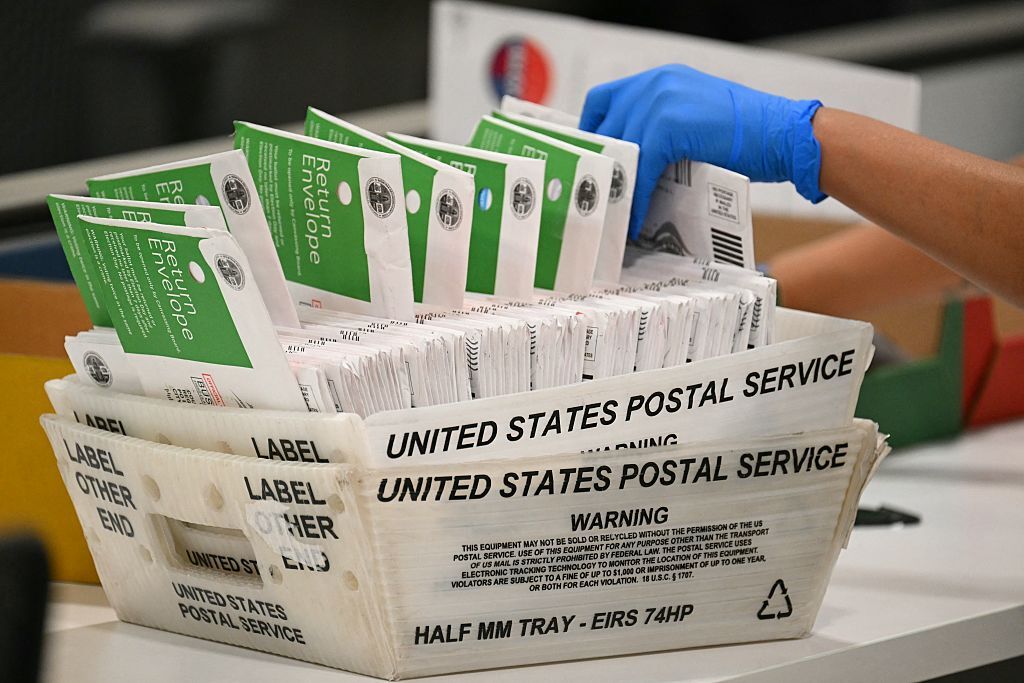
In practice, attacks on mail voting have become a convenient—though false—vehicle for keeping the voter fraud narrative Trump loves to push, front and center.
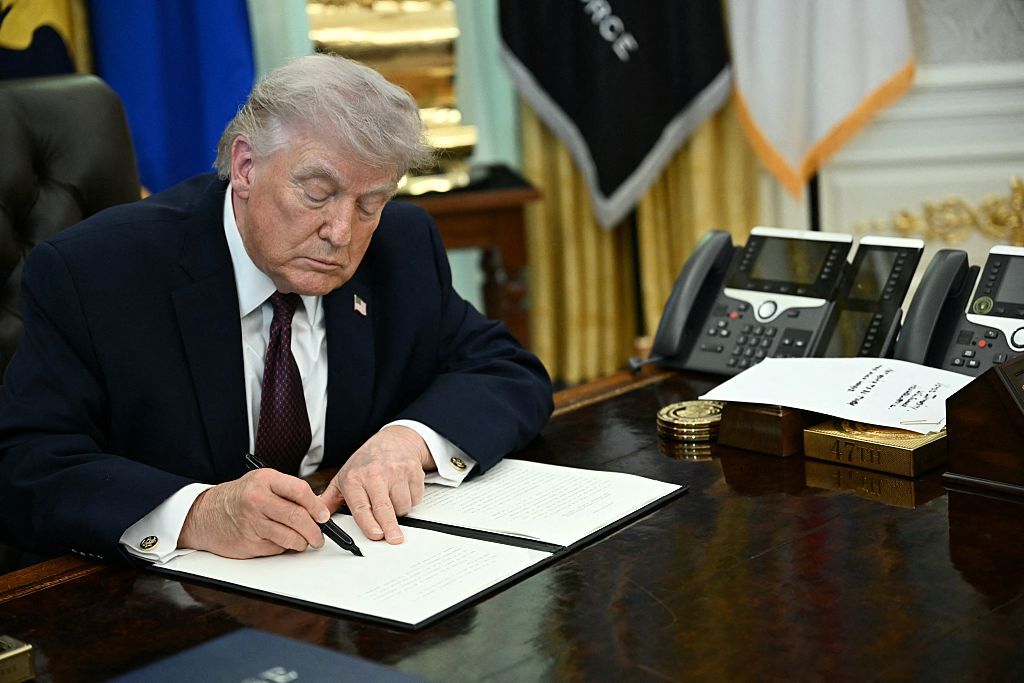
Trump has repeatedly tried to restrict Americans’ ability to vote by mail. His latest effort, following several failed attempts, began with an executive order he signed on March 31: “Ensuring Citizenship Verification and Integrity in Federal Elections.” The order seeks to shift authority over federal elections from the states—which the Constitution grants primary responsibility for administering elections—to the federal government.

At the time, I wrote of Trump’s EO: “The point emerges early on. This is not an EO about ensuring election integrity. It’s an effort to let politicians, namely this president, influence election outcomes instead of letting voter elect their chosen representatives.”
The Postal Service responded by promulgating new rules requiring states to turn over their voter rolls to the administration. A failure to comply with that rule would cost states the ability to mail ballots to their voters, because only people appearing on official Trump-approved voter rolls generated after vetting the state rolls will be eligible to have ballots mailed to them. If states don’t turn over their lists, no mail ballots.
There should be sustained outrage and protests over this. But with this administration, there is so much going on that it becomes hard to focus on any one thing.
It would have been unimaginable for the Carter, Clinton, Obama or Biden administrations (or even Reagan or Bush) to restrict voting like this.
The federal government is going to prevent states from using the U.S. mail to send out ballots, unless the states let the federal government decide who is eligible to vote—under rules set by each state. It’s vile voter suppression, removing decision-making authority from the states and vesting it in the Trump administration, which has repeatedly demonstrated its interest in winning, even if that means keeping Democrats from voting or refusing to count their votes when they do.
There should be sustained outrage and protests over this. But with this administration, there is so much going on that it becomes hard to focus on any one thing. They are counting on that here, which means it’s essential for us to pay attention.

There are, of course, lawsuits challenging this executive order. Three of them, brought by the Democratic Senatorial Campaign Committee (DSCC), the League of United Latin American Citizens (LULAC), and the National Association for the Advancement of Colored People (NAACP), were consolidated in front of Judge Carl Nichols in the District of Columbia.
Last month, the judge declined to enter an injunction that would stop the administration’s efforts to get voter lists.
In a notice filed Thursday in federal court, the Trump administration advised the court it has created a “new General Privacy Act System of Records (SORN) to coincide with its proposal to amend the Mailing Standards of the United States Postal Service, Domestic Mail Manual (DMM), regarding the transmission of mail-in or absentee ballots for federal elections.”
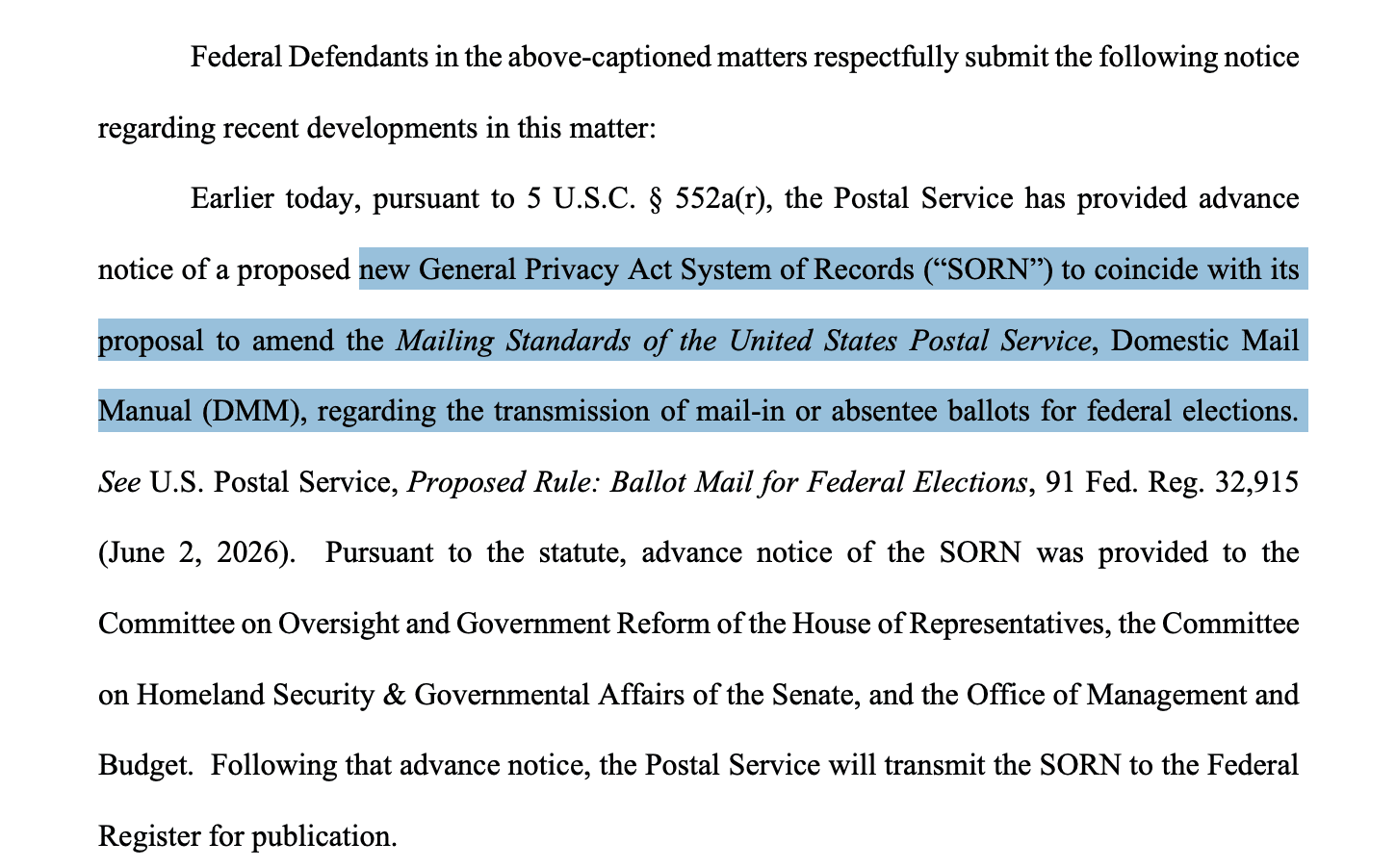
That’s important because Judge Nichols wasn’t giving a seal of approval to the administration’s plans; instead, he held that they weren’t far enough along toward implementation for him to grant an injunction, which requires proof that irreparable injury is imminent.
He wrote, “The Court recognizes that the Postal Service may ultimately issue a final rule that directly affects Plaintiffs or their members, or that the Government may develop State Citizenship Lists that omit specific individuals due to particularized flaws. Plaintiffs may, of course, renew their motions if and when those future actions occur. Until then, however, Plaintiffs cannot show that preliminary injunctive relief is warranted.”

There are also two lawsuits filed in Boston before Judge Indira Talwani:
- The first is League of Women Voters of Massachusetts v. Trump.
- The second is California v. Trump, filed by 20 states’ attorneys general.
Talwani entered an order in those cases late last week.
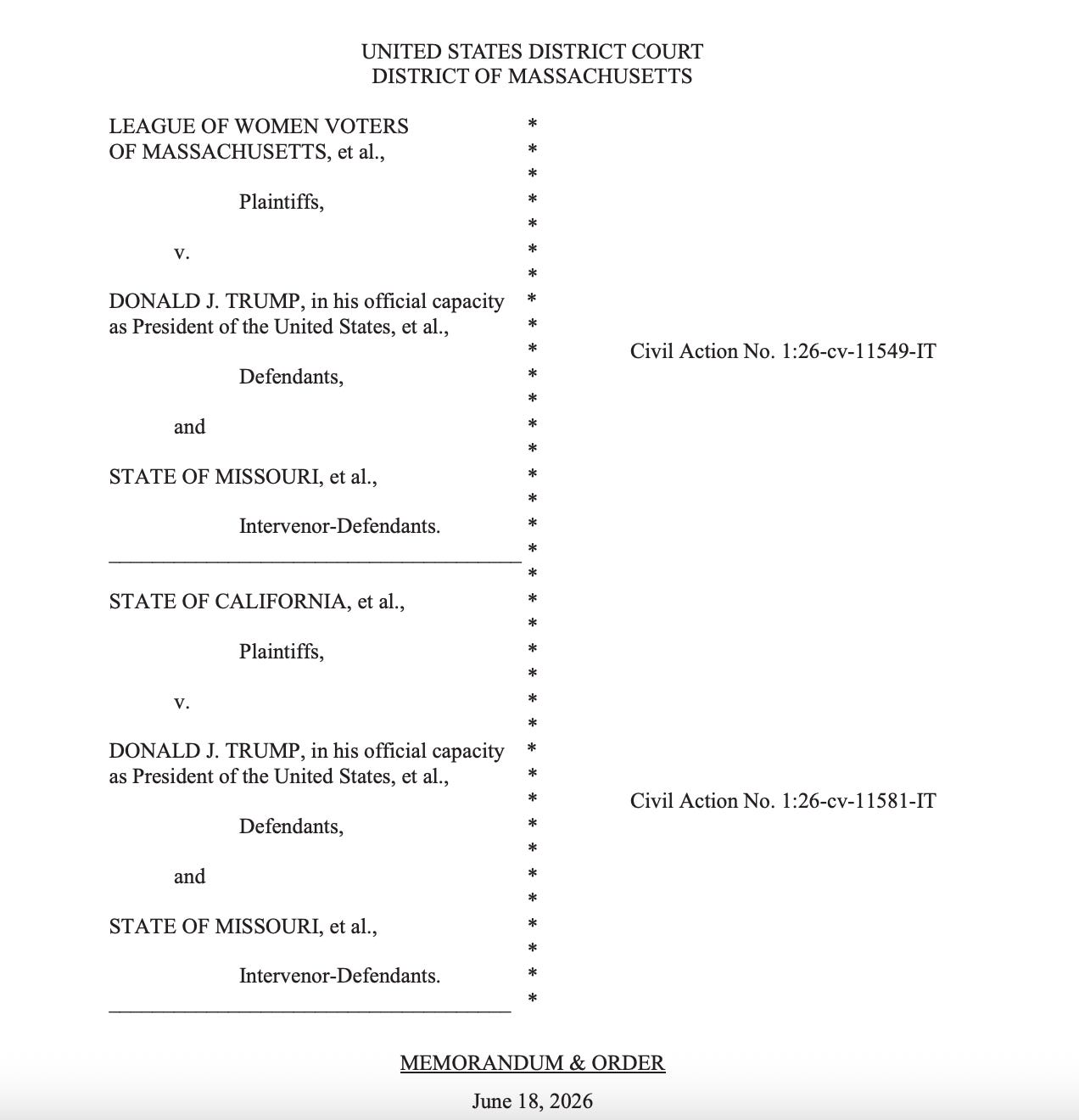
That order raised similar claims about the “ripeness” of the issues for a decision, to the ones raised in the consolidated cases before Judge Nichols. Judge Talwani ruled that claims for “elections occurring after November 3, 2026” were not ripe, but permitted others to go forward. That means she will consider the plaintiffs’ claims as they apply to the midterm elections. She held that the court should not delay review given the “ever-narrowing window of time” before the election and some states’ primaries. There is more to come in these cases.
The challenges to this executive order may well determine how and when you vote this November. So I asked my Brennan Center colleague Wendy Weiser, one of the lawyers in the League of Women Voters case, to share her perspective.
This is a long conversation, but it’s important—we all need a baseline understanding of what’s at stake here, especially with the prospect of the Supreme Court deciding Watson v. Republican National Committee, the Mississippi case over whether ballots mailed by Election Day but not received until afterward can, where state law permits it, be counted. (Read more about Watson here.) It’s important to understand: That case presents a separate issue from developments with Trump’s catastrophic executive order on vote by mail.
Editor’s note: On Monday, a federal judge blocked the Trump administration from moving forward with a new database that combined Americans’ Social Security information with citizenship records, ruling that the system likely violated federal privacy laws and threatened eligible citizens’ voting rights.
In a sharply worded decision, U.S. District Judge Sparkle Sooknanan found that the administration had shared inaccurate citizenship data with states, leading some eligible voters to be wrongly flagged as non-citizens and removed from voter rolls.
The lawsuit, brought by voting rights groups including the League of Women Voters, challenged the administration’s expansion of the Department of Homeland Security’s SAVE database, which was intended to help states verify voter eligibility. Sooknanan concluded that the federal government improperly consolidated sensitive personal information, potentially violated the Social Security Act and Privacy Act, and exposed citizens to reputational harm by falsely labeling them as non-citizens.
The ruling immediately halts implementation of the database and marks another setback for the administration’s broader efforts to reshape election administration without congressional approval. Plaintiffs hailed the decision as a victory for voter privacy and voting rights; the Trump administration is expected to appeal.
Vance’s questions to Weiser and her answers are below.
Joyce Vance: Why does Trump hate voting by mail?
Wendy Weiser: President Trump does not hate mail voting, at least not for himself. In fact, he has voted by mail on many occasions, including in March of this year. Nonetheless, he relentlessly criticizes the practice and is trying to make sure that the rest of us cannot similarly access that convenient form of voting.
Mail voting, or absentee voting, refers to a set of election practices that allow voters to receive or transmit ballots to election officials outside of a polling place (including by mail, at ballot drop boxes, or at designated election offices). It is convenient. It is secure. And it is very popular.
The president’s attacks on mail voting have nothing to do with any real problems with the practice. American elections have featured mail voting in some form or another dating back to the Civil War.
Over time, the practice expanded so that by 2016, 40 percent of voters cast mail ballots, in red states, blue states and purple states alike. The practice was backed by a broad bipartisan consensus—and for good reason. Not only is it convenient and cost effective, but it is also safe, protected by many layers of security features, including bar coding and careful verification procedures by election officials. Years of studies and investigations have proved our mail voting systems do a great job of preventing malfeasance.
The Trump administration has been engaged in a multipronged, concerted campaign to undermine the 2026 elections—laying the foundation to interfere with election procedures, suppress votes or even overturn results.
Wendy Weiser, Brennan Center
So then, what is behind Trump’s campaign against mail voting?
First, his election losses. For the past six years, the president has been waging a campaign to discredit the results of the 2020 election, which he lost. Because of the pandemic in 2020, 69 percent of voters cast their ballots by mail, a sharp increase from before. That shift made mail voting a convenient target for conspiracy theories.
Trump also complained about mail voting in the 2016 election; although he won that election, he lost the popular vote by almost three million votes.
Now, the president and his administration are using his conspiracy theories about mail voting and lies about the 2020 election as a springboard for a broader effort to undermine and interfere in this year’s midterms. My organization has been documenting—and fighting—the administration’s unprecedented and concerted efforts to meddle in elections. They are going after multiple elements of our election system, from our voter rolls and voting machines, to election officials, to the ways we vote. Mail voting remains a significant element of our elections (with 30 percent casting ballots by mail in 2024) and is one of the president’s recurring targets.
Vance: What is involved in Trump’s newest plan to interfere with mail-in voting?
Weiser: The president’s new plan to regulate mail voting is in an executive order that has not yet been—and we hope never will be—fully put into effect. He issued the order, cynically called “Ensuring Citizenship Verification and Integrity in Federal Elections,” on March 31, 2026. It aims to regulate mail voting in the following ways:
- It orders the Department of Homeland Security to create lists of all adult U.S. citizens by state;
- It asks states that allow mail voting (which is all of them) to provide the U.S. Postal Service with lists of their voters who are eligible to cast and to whom they intend to provide mail ballots;
- It directs the Postal Service to refuse to deliver mail ballots if voters are not included on newly mandated lists; and
- It directs the Department of Justice to prioritize investigating and prosecuting election officials who allegedly provide ballots to ineligible individuals.
There is a lot that is wrong with this plan. A major one is that it essentially orders the Postal Service to refuse to deliver valid election mail from (or to) eligible American voters. Nothing like this has ever been done before. In fact, federal law requires the USPS to be a neutral service, prohibiting it from choosing the kind of mail it delivers or the people to whom it delivers mail.
There are several cases challenging this executive order (including one brought by the Brennan Center, with co-counsel) pending in the federal courts. The ongoing litigation will determine whether and how the order will impact the upcoming elections.
Vance: How would the executive order impact voters in the midterms and beyond if it went into effect?
Weiser: First and foremost, we hope (and expect) that courts will step in and block Trump’s mail voting executive order before November in one or more of the lawsuits challenging it.
If the order is actually implemented, many eligible American voters will be blocked from casting mail ballots, and those Americans who can only vote by mail (like many disabled, elderly, rural, Native and student voters) could be flat out disenfranchised.
The order would impose a massive cost on states, which would be passed down to their residents. States would be strong-armed into creating entirely new election processes and infrastructure, and making changes to voting materials, educational materials, and trainings, in a short period of time. It’s easy to imagine how much can go wrong.
All of this will sow doubt and mistrust in elections, and will lead to even more confusion and post-election disputes over election results.
Trump may have a plan, but so do we.
Wendy Weiser
Vance: Tell us about the lawsuits challenging the executive order, including yours, and how you expect them to proceed?
Weiser: There are two lawsuits challenging the executive order pending in federal court in Massachusetts and three in federal court in D.C.
The Brennan Center filed one of these suits in Massachusetts, along with co-counsel (ACLU, ACLU of Massachusetts, Legal Defense Fund, Asian Americans Advancing Justice, and LatinoJustice PRLDEF) on behalf of civic organizations that serve voters (League of Women Voters of Massachusetts, League of Women Voters, Association of Americans Resident Overseas, U.S. Vote Foundation, OCA, and Delta Sigma Theta Sorority, Inc.). California and nearly two dozen other states also challenged the order in the same court district, and those lawsuits have been combined.
Our lawsuit argues that:
- The order violates the Constitution’s separation of powers because the president doesn’t have authority to set election rules.
- The president has overstepped his constitutional authority by attempting to direct the USPS, an independent agency that only Congress can regulate.
- The order’s commands to USPS are unlawful because, among other things, they violate statutes that require USPS to serve as a neutral mail carrier.
- The order’s mail voting provisions unduly burden voters in violation of the Constitution’s protections of the right to vote and prevents eligible citizens from voting in violation of the Voting Rights Act.
- The order unconstitutionally tries to force states to change their election procedures by threatening not to deliver mail-in ballots unless they do so.
- The order does not satisfy the requirements of the Privacy Act designed to protect Americans’ private data.
The legal questions in these cases should be easy ones. Neither the president nor USPS has the power to regulate federal elections. Under the U.S. Constitution, only Congress and the states have the power to make rules for federal elections—not the president.
What’s more, the Constitution gives authority over the postal service only to Congress—not the president.
Back in March 2025, the president issued another executive order purporting to change the rules for other aspects of elections, including voter registration. Three federal courts blocked that order because the president has no role in regulating elections. That should be true here too.
The federal court in Massachusetts held a hearing on June 2. Plaintiffs argued that the court should block the order from being implemented, and the administration argued the case should be thrown out because it had not yet implemented the order. Just yesterday, the court ruled that the case may proceed as applied to elections this year, including the midterms, rejecting the government’s argument that it is not ripe for judicial review. The court has not yet ruled on the motions to block the order.
Other cases challenging the executive order were consolidated in federal court in D.C.
On May 28, the D.C. court ruled that the plaintiffs’ claims were not yet ripe for review and declined to block the order. Those cases are still pending too.
Vance: What’s the broader outlook—what should we expect in terms of voter suppression efforts at the midterms?
Weiser: The Trump administration has been engaged in a multipronged, concerted campaign to undermine the 2026 elections—laying the foundation to interfere with election procedures, suppress votes or even overturn results. This campaign began on the president’s first day in office in 2025 (when he pardoned the January 6 defendants) and shows no signs of slowing down. It is aimed at destroying trust in elections to depress participation and justify taking control.
One jarring feature of this campaign is the abuse of law enforcement powers for political ends.
Just last week, the FBI targeted four organizations in Ohio that engage in voter mobilization, abusing investigative power to target perceived adversaries. One of the targeted groups—the Ohio Organizing Collaborative—has helped to register 100,000 voters in 2024.
Earlier, the FBI raided an election office in Fulton County, Ga., seizing election materials from 2020 and threatening to harass thousands of hardworking election officials.
And the Department of Justice has sought voter records from nearly every state in the country that contain voters’ confidential information, like drivers’ licenses and Social Security numbers and voting history, with a clear intent to meddle with the voter rolls.
Administration leaders have repeatedly threatened to escalate their attacks on voters, voter mobilization groups, and election officials in advance of the elections.
Trump may have a plan, but so do we. The president has telegraphed his intent to meddle in elections for a long time. His efforts are, for the most part, unlawful. That means courts can step in, and already have stepped in, to stop them. For example, eight courts so far have ruled in 31 lawsuits DOJ filed to try to compel states to turn over voter rolls; all eight (including four judges appointed by Trump) have thrown out DOJ’s claims. And in the aftermath of the 2020 election, Trump and his allies tried to undermine the results, only to be blocked by the courts time and time again.
The Brennan Center and others are also preparing outside of courtrooms, training citizens, advocates and public officials to protect our elections and be ready to guard against federal abuses of power. As they do every year, state and local election officials have prepared plans to defend against all manner of threats, including from foreign meddling, domestic agitators—and now, sadly, federal government interference. That includes backup plans to ensure that citizens can vote. Leaders and experts from across the political spectrum stand ready to rebut the myriad lies about elections that we know are coming. And community organizations and citizens across the country are mobilizing to protest or push back against any illegitimate attempts to interfere in elections or suppress votes.
The administration is not the only threat to free and fair elections. The Supreme Court may be poised to unleash chaos as well. Sometime this month, it will decide a case that could change the deadline for mail ballots for millions of Americans, throwing election procedures into disarray in more than 30 states. It has already unleashed chaos this election cycle—and a race to the bottom in gerrymandering—by gutting the landmark Voting Rights Act in its shameful Callais decision and greenlighting last-minute redistricting efforts targeting communities of color.
Vance: What can we do to prepare?
Weiser: The most important thing any American can do is to make a concerted plan to vote in this year’s elections. Check your voter registration status, learn all your voting options and vote as early as you can. Educate yourself about the election process in your state, and don’t fall for conspiracy theories. Make sure that everyone you know does the same.
If you can, get involved in the election process. Sign up to be a poll worker, an election worker, a translator, or an election observer. Volunteer for a campaign or a civic group. Support nonprofit groups that are working to protect elections or help voters. Do what you can to support embattled local election officials and scared voters in your community. Whatever lane you pick, it’s important to do something.
Beyond participating in elections, Americans across the country should be prepared to stand up for democracy and free and fair elections. Voting rights don’t enforce themselves. Democratic values don’t sustain themselves. It’s on all of us to stand with our neighbors, speak out against injustice, hold public officials accountable and mobilize peacefully to protect each other and our right to vote.
Ensure work like this article continues
At Ms., we believe the stories that shape women’s lives deserve serious, sustained coverage. That’s why, since 1972, we’ve reported on gender, politics, democracy, reproductive freedom, economic justice and culture long before the mainstream press caught up. Our journalism remains independent because it is funded by readers—not advertisers, corporations or billionaires. If this story mattered to you, please consider supporting Ms. by making a tax-deductible donation, becoming a member to receive a magazine subscription, or gifting a membership to a friend. Your support helps ensure that feminist journalism not only survives, but thrives.