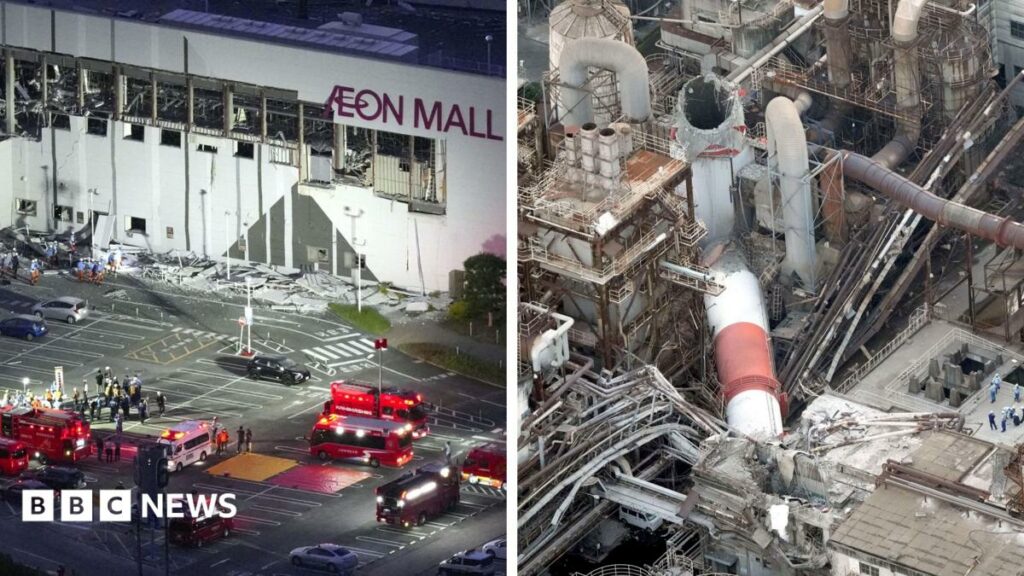
Rescue teams work overnight in Kyushu following a major earthquake, with people missing in a mall and a factory.
Key Points
- Magnitude 6.8 earthquake hit Kyushu at 16:27 local time.
- Rescue workers search collapsed mall and factory for missing people.
- Many buildings, including Kumamoto Castle and facilities, are damaged.
- Previous major quakes include those in 1995 and 2011.
- Aftershocks continue to rattle the region.
Rescue operations are underway after a 6.8-magnitude earthquake struck Japan's Kyushu island on Tuesday afternoon. Authorities confirmed that individuals remain trapped in a collapsed shopping center in Kumamoto, and a factory chimney has also collapsed, causing more people to go unaccounted for.
Magnitude 6.8 earthquake hits Kyushu
A powerful 6.8-magnitude earthquake rocked Kyushu island in southwestern Japan on Tuesday afternoon. The quake caused significant damage to buildings and infrastructure, leaving residents in distress and emergency services scrambling to respond.
The tremor, which struck inland, resulted in a shopping center collapsing in Kumamoto. Officials have reported that several people are missing, believed to be trapped under the debris. Additionally, a chimney at a nearby factory also collapsed, raising concerns about further casualties.
“I've experienced a few earthquakes here so it's a sensation I have come to be a bit more familiar with, but not to that degree.”Matt Gingell
Impact on local infrastructure and businesses
The earthquake has disrupted daily life across Kumamoto and surrounding regions. Numerous facilities, including schools, community centers, and sports halls, have been closed as authorities assess damages and ensure the safety of residents.
Kumamoto Castle, a historic site from the 17th century, sustained damage as the outer walls crumbled during the quake. Parts of the castle had been previously damaged in a similar earthquake in 2016.
Witnesses recount their experiences
Matt Gingell, a resident of Kumamoto, described the quake's intensity as something he had never experienced before, despite being familiar with seismic activity in the region. He noted seeing cracked buildings and debris scattered across the streets.
Michal Posen, another local resident, mentioned her TV fell during the quake and expressed concern about ongoing aftershocks. She is preparing evacuation bags as a precautionary measure in case of further emergencies.
Japan's earthquake history
Japan's geographical position at the junction of several tectonic plates makes it highly susceptible to frequent and often severe earthquakes. Past disasters have shown the deadly potential of such events, like the 2011 quake and tsunami which devastated Honshu, killing thousands.
The 2016 earthquakes in Kumamoto claimed over 200 lives and caused significant damage, highlighting the ever-present risk faced by residents in this region.
Background
Japan's position along major tectonic plates exposes it to frequent seismic activity, with some of the deadliest earthquakes in history recorded here. In 1923, the Great Kanto earthquake killed over 100,000 people, while the 2011 disaster led to a nuclear crisis.
The country's resilience and preparedness in responding to such natural calamities have evolved, yet these events continue to pose significant challenges, particularly in densely populated urban areas.
What's Next
- Rescue operation continues into the night to search for survivors.
- Authorities to assess structural damages and begin recovery planning.
- Residents brace for continued aftershocks and potential secondary quakes.
- Government to update safety protocols and public preparedness measures.