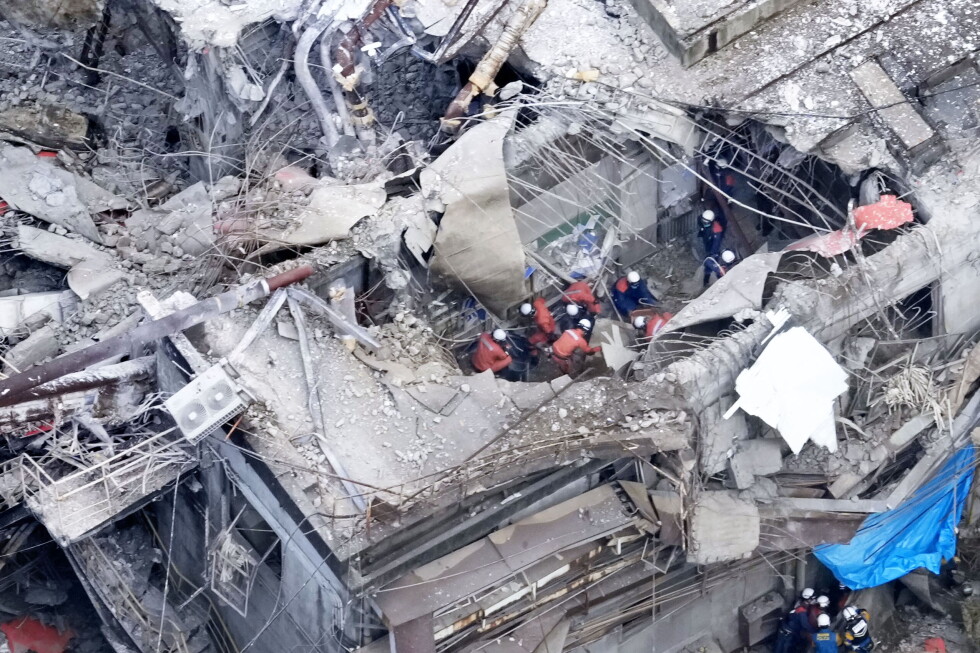
Emergency crews comb through rubble in southwestern Japan after quake kills 18, leaves thousands in distress.
Key Points
- 18 confirmed dead following the Kumamoto quake.
- Magnitude 7.1 quake caused extensive damage to structures.
- Thousands remain without power and water services.
- Rescue operations involve soldiers and firefighters from Taiwan.
- Prime Minister vows to intensify rescue efforts.
Rescue teams are intensively searching for survivors in southwestern Japan following a devastating magnitude 7.1 earthquake that has claimed 18 lives, authorities said Wednesday. The quake struck the Kumamoto area, causing widespread damage to infrastructure, including a shopping mall and residential properties.
Extent of the Damage
The epicenter of the earthquake was in the Kumamoto region, which experienced severe structural damage. The Aeon Mall in Kashima town suffered a collapse on its second floor, trapping several individuals. Areas around the Nippon Paper Industries factory also reported fatalities due to a collapsed chimney.
Over 34,900 homes are without electricity, and approximately 15,000 are without running water. Temporary shelters have been established, with efforts underway to improve living conditions, such as adding air conditioning amid sweltering temperatures.
“We will go all out to find and rescue as many people as we can.”Prime Minister Sanae Takaichi
Rescue Operations Underway
Japan's Self Defense Forces have joined local emergency services in a massive search and rescue mission. International support includes firefighters from Taiwan assisting these efforts.
Prime Minister Sanae Takaichi pledged a comprehensive federal response, detailing efforts to provide supplies such as food and daily necessities to the hardest-hit regions. Authorities remain focused on rescuing any survivors as soon as possible amid the rising death toll.
Impact on Transportation and Services
The earthquake has severely impacted local transportation and services. Bullet train services in the region remain suspended as infrastructure assessments continue.
Kumamoto's airport has resumed operations, although some airlines opted to cancel flights to assess safety. Authorities are prioritizing the restoration of essential public services to mitigate further disruptions.
Background
Japan’s southwestern region, particularly Kumamoto, is no stranger to seismic activity. In 2016, a series of earthquakes in the same region resulted in over 50 deaths and widespread damage. This current tremor underscores Japan's vulnerability as it sits atop the Pacific 'Ring of Fire,' known for frequent earthquakes and volcanic activity.
The financial and physical toll is considerable, with many businesses and homes affected—not just from the initial quake, but also the subsequent infrastructure failures, such as electricity and water supply disruptions.
What's Next
- Rescue operations will continue as authorities work around the clock.
- Authorities to deliver essential supplies to affected regions.
- Restoration of utility services such as electricity and water is a priority.
- Further assessments of infrastructure damage underway to minimize hazards.