
The Global Progressive Mobilization summit in April united leaders from 40 countries to counter Trump policies and deepen Europe-Latin America ties.
In a nutshell
- Latin American leftists joined European socialists in opposing Trump
- At the GPM summit, delegates criticized Trump while ignoring the cartels
- Despite numerous scandals, Spain’s Sanchez emerged as a progressive leader
- For comprehensive insights, tune into our AI-powered podcast here
As the administration of United States President Donald Trump continues to challenge progressive priorities on issues such as gender ideology, abortion, illegal immigration and climate policy, the international left is working to organize a coordinated response. Against this backdrop, the April 2026 Global Progressive Mobilization (GPM) summit was convened in Barcelona by Spain’s Socialist Workers’ Party.
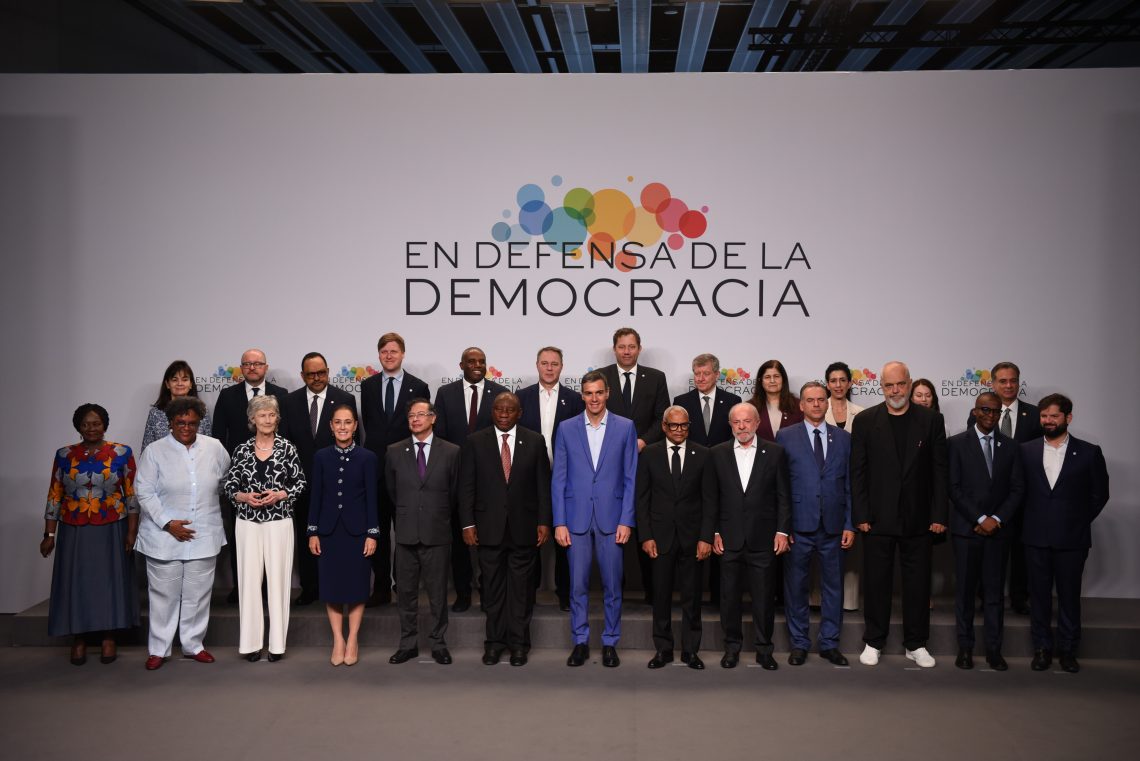
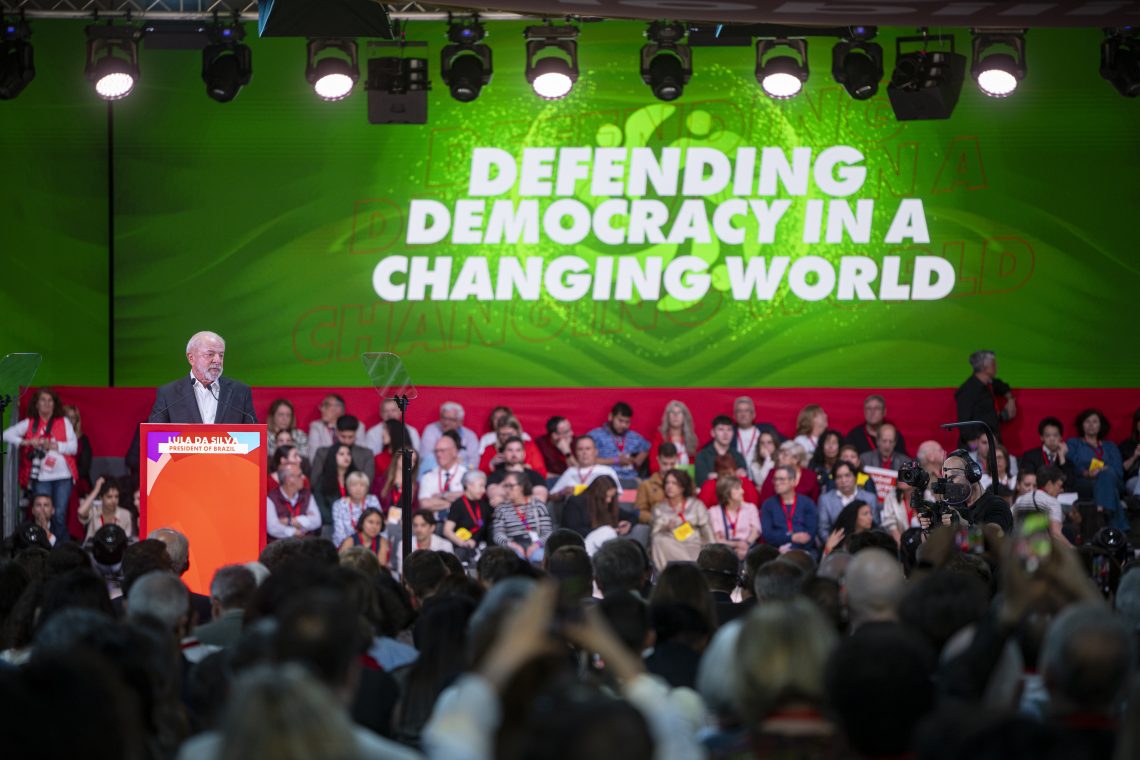
The Global Progressive Mobilization summit brought together around 6,000 participants from 40 countries. Among the high-profile attendees were Brazilian President Luiz Inacio Lula da Silva (known as “Lula”), Mexican President Claudia Sheinbaum, Colombian President Gustavo Petro and Uruguayan President Yamandu Orsi.
The unstated but unmistakable objective was to mount collective resistance against President Trump, whose policies since taking office for the second time have undermined the political and ideological foundations of the progressive model. For the Latin American left, the summit offered a vital platform to secure international support as it struggles to recover from recent electoral defeats in countries including Argentina, Bolivia, Chile, Costa Rica, Honduras and Peru, as well as from damaging political scandals.
President Lula, one of the founders of the Sao Paulo Forum, is taking steps to shift the forum’s political focus toward Europe, particularly Spain. With backing from Spanish Prime Minister Pedro Sanchez, the Latin American left aims to hold its ground until political change occurs in the U.S.
Alliance between Latin America and European social democrats
Unlike other international alliances of the past, the Latin American left is building organic ties with major European social democratic parties, the U.S. Democratic Party and global networks of progressive activism through the GPM. As President Lula emphasized at the meeting, “We are undertaking a very serious effort.”
The GPM has received backing from several notable organizations, including the Party of European Socialists, the Global Progressive Foundation, the Center for American Progress Action and the Friedrich Ebert Foundation. Alex Soros, son of George Soros, served as host at the summit in Barcelona, alongside Prime Minister Sanchez.
The U.S. Democratic Party was represented by Senator Chris Murphy and Minnesota Governor Tim Walz, both steadfast opponents of President Trump’s policies. During the meeting, Lars Klingbeil, Germany’s vice chancellor and leader of the German Social Democrats, told reporters that the strong U.S. Democratic representation marked a historic first and demonstrated that the movement is expanding.
How can the Democratic Party, supposedly pro-capitalist, ally itself in the same organization with anti-American factions and even heirs of Fidel Castro? While differences exist on political, economic and moral grounds, what unites them is their shared opposition to President Trump’s policies, which they see as a threat to their power structures.
Although few leaders mentioned Mr. Trump by name, references to the U.S. president and criticism of his policies arose repeatedly. From tariffs to the war in Iran, speakers called for a progressive response to what they described as “a reactionary wave.”
In comments about President Trump, Prime Minister Sanchez highlighted attacks on the multilateral system, repeated efforts to undermine international law and the dangerous normalization of the use of force. Senator Murphy stated that Mr. Trump was out to end American democracy and that the country was already in the middle of a totalitarian takeover rather than on the verge of one.
President Lula proclaimed: “We cannot get up every morning or go to bed every night waiting for a tweet from a president threatening the world.” President Petro criticized U.S. government policies and expressed regret about being included on the U.S. Treasury Department’s Office of Foreign Assets Control sanctions list due to his alleged ties to drug trafficking.
Former Spanish President Jose Luis Rodriguez Zapatero, an ally of ousted Venezuelan dictator Nicolas Maduro, highlighted the importance of Latin American unity. He argued that this unity should serve as a driving force for progressives throughout the region, especially as the right wing aligns itself with President Trump.

Questions over Mexico-U.S. cartel cooperation
President Sheinbaum’s attendance raised questions about U.S. security policy regarding the fight against Mexican cartels. Until now, the governments of Mexico and the U.S. had cooperated on operations against drug cartels, such as the killing of Jalisco New Generation Cartel leader “El Mencho” in February 2026. However, Sheinbaum’s remarks at the summit cast doubt on the future of that collaboration.
She was careful not to mention President Trump but proposed signing a joint statement “against military intervention in Cuba” and called for “respect for the self-determination of peoples, non-intervention and the rejection of the use of force.” This is diplomatic language intended to garner international support for resisting the White House’s policies against Mexican cartels.
Sanchez’s elevated role
The GPM summit served as the backdrop for Prime Minister Sanchez’s anointing as the central figure of the global progressive movement. With President Lula now 80 and facing likely defeat in the upcoming presidential elections, he is handing over the reins to Mr. Sanchez, enabling him to steer the Sao Paulo Forum.
This support comes at a crucial moment for Prime Minister Sanchez amid a wave of corruption scandals involving his wife, his brother, his administration and his closest associates. Just last month, his former deputy, Jose Luis Abalos, appeared before Spain’s Supreme Court on charges of bribery, influence peddling, embezzlement and belonging to a criminal organization.

Just before the GPM meeting in Barcelona, the Spanish prime minister traveled to China – for the fourth time in four years – to strengthen his alliance with Chinese President Xi Jinping. During a recent address to around 500 students at Tsinghua University in Beijing, Mr. Sanchez advocated for multilateralism and urged China to take a more active role in establishing a stable multilateral system. He emphasized that Spain recognizes China’s journey toward reclaiming its global stature, noting that the country has become the world’s top exporter of goods and the fourth-largest exporter of services.
President Xi commended Spain for upholding the international order, stating that, like China, “we have principles and advocate for justice, and we are willing to stand on the right side of history,” in contrast to “the law of the jungle” – an indirect reference to the U.S. and Israel.
In this context, Beijing is enlisting a European ally with strong cultural and political ties to Latin America to continue President Lula’s work as a proponent of Chinese interests in the Western Hemisphere. This strategy poses risks for Mr. Sanchez, given Spain’s NATO membership. Aligning too closely with China could brand him a Chinese sympathizer in Europe, with serious repercussions.
Read more on Latin America by Alejandro Peña Esclusa
Gaps in the agenda
The GPM summit focused on themes of democracy, peace, non-intervention and anti-corruption. Yet when it came to Latin America, the gathering conspicuously avoided the region’s most pressing crises: organized crime, money laundering and the fight against powerful drug cartels. These issues, which fuel violence, destabilize governments and undermine the very democratic institutions the left claims to defend, received almost no attention. Instead, the dominant theme was defeating the Republican Party in the November 2026 U.S. midterm elections.
This raises an important question: How feasible is this strategy given today’s geopolitical landscape?
Scenarios
Most likely: The GPM’s objectives fail
Internal differences are likely to constrain the GPM. For instance, the U.S. Democratic Party may struggle to support China’s interests, as Mr. Lula does. Similarly, the German Social Democrats find it challenging to overlook Prime Minister Sanchez’s corruption scandals or President Petro’s connections to drug trafficking.
The GPM was largely a high-profile networking and messaging event, and it lacked the momentum needed to change President Trump’s policies. Consequently, the White House continues to promote the Shield of the Americas to fight drug cartels and to advocate for political change in Cuba, despite criticism from the left and President Sheinbaum’s rhetoric.
For its part, the Sao Paulo Forum is expected to continue losing elections in Colombia and Brazil, according to polls. New links between elements of the Latin American left and organized crime have been alleged and are expected to come to light, as is anticipated in the trial against Nicolas Maduro. By the time the midterm elections are held in the U.S., many Latin American countries will already be governed by the right.
Prime Minister Sanchez is unable to change the course of events in Latin America, even with China’s support. On the contrary, this support could seriously undermine his hopes for reelection in 2027.
Less likely: An unexpected turn of events works in the GPM’s favor
For the GPM to achieve its goal of reversing President Trump’s policies, some unforeseen event with a major impact would have to occur. Such events include an assassination attempt on Mr. Trump (there have already been three), the Democrats winning the election in November and moving forward with impeachment proceedings or the conflict with Iran failing to stop the ayatollahs from advancing their nuclear weapons development.
Even in this scenario, the objectives of the Shield of the Americas would remain the same. The right-wing Latin American presidents, who make up the region’s majority, would strengthen their alliance and continue their joint efforts to eliminate criminal mafias in the region. They would also work to attract investment from the U.S. and Europe, thereby reducing China’s influence and preventing any potential resurgence of the Sao Paulo Forum.
Contact us today for tailored geopolitical insights and industry-specific advisory services.

Sign up for our newsletter
Receive insights from our experts every week in your inbox.